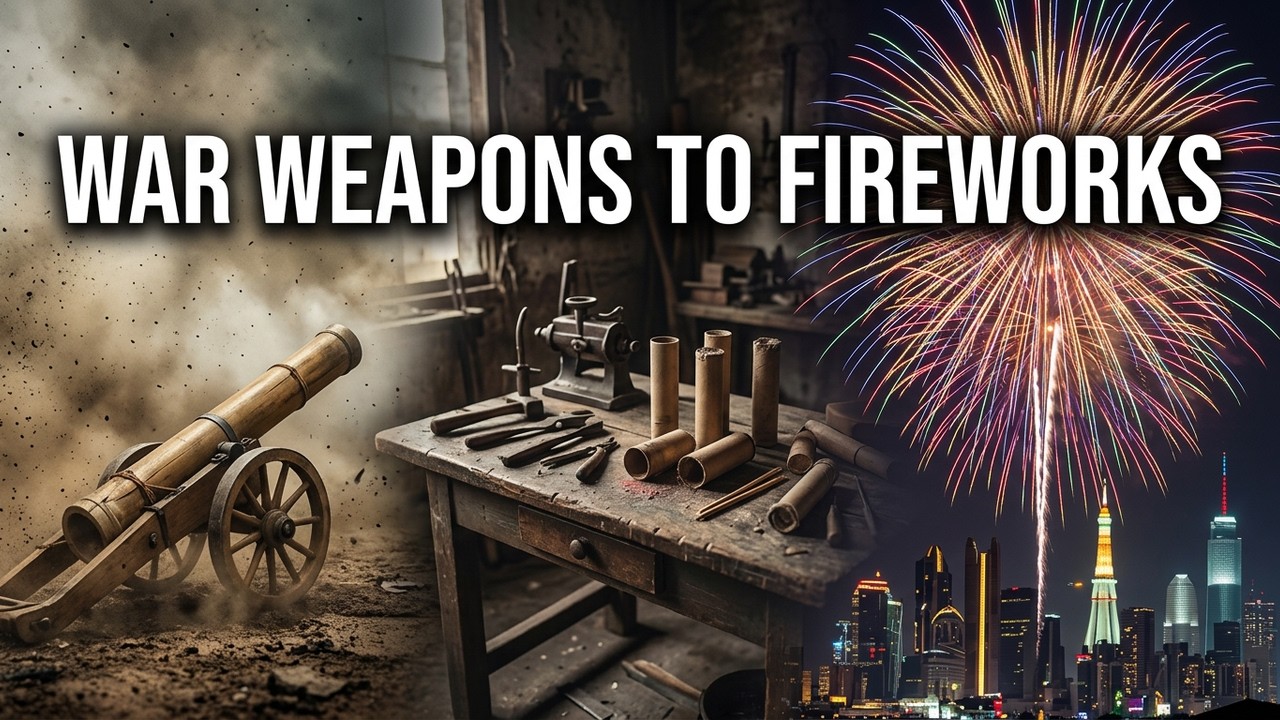
WWII's Most Unexpected Legacy: How Bulacan Conquered Fireworks
10:30 · 8,256 plays
From the album The Philippines They Erased
Description
The Philippine fireworks industry is WWII's strangest legacy — the Philippine fireworks industry centered in Bocaue Bulacan, the fireworks capital of the Philippines, traces its roots to guerrilla fighters who secretly manufactured improvised weapons during the Japanese occupation, and this is the full hidden history of how wartime explosive knowledge became the paputok tradition that makes Filipino New Year one of the loudest celebrations on earth. Filipino fireworks history, Bocaue Bulacan, paputok, Philippine New Year traditions, WW2 Philippines guerrillas, Japanese occupation resistance, pre-colonial Filipino beliefs — every layer of this story is covered in this video. The story begins long before gunpowder ever reached the islands. Pre-colonial Filipino communities believed loud sounds drove away evil spirits and used bamboo cannons, drums, and gongs at every moment of transition — especially the turning of the year. Chinese trading ships brought gunpowder and firecrackers to the islands centuries before European contact, and the Chinese tradition of using firecrackers to frighten evil spirits fused perfectly with beliefs Filipinos already held. Under Spanish colonial rule gunpowder was a restricted military technology but Filipino panday craftsmen learned it anyway, and by the Philippine Revolution of 1896 revolutionaries were producing their own ammunition in hidden workshops. During World War Two, guerrilla fighters in the provinces around Manila — particularly Bulacan — manufactured improvised weapons and explosives under Japanese occupation in workshops where discovery meant unalived. When the war ended in 1945 that hard-won explosive knowledge converted into peacetime industry. Family workshops opened. Fathers taught sons. Within a single generation Bocaue became the fireworks capital of the Philippines, a title it still holds today. This video covers the complete story — the pre-colonial spirit beliefs, the Chinese gunpowder legacy, the colonial restrictions, the revolutionary workshops, the wartime
You May Also Like
- 1

AlbumDavid Rey
David Rey · 5,584 plays
- 2
AlbumMMNL...Superstars
Liberty Bwanali · 2,790 plays
- 3
AlbumDudi Sharon Radio
174 plays
- 4
Albumगंदा Amps
Bombay Nights · 4,554 plays
- 5
AlbumThe Agonist Radio
6,946 plays
- 6
AlbumCallum Higby Radio
9,399 plays
- 7
AlbumRico Music Eg
Rico Music Eg · 4,793 plays
- 8
AlbumDays Are Mighty
Jeb Loy Nichols · 4,521 plays
- 9
Albumtha kid
tha kid · 3,201 plays
- 10
AlbumAssuming It's the End
MÔS · 6,093 plays
- 11
AlbumRobert V Ayres
Robert V Ayres · 6,942 plays
- 12
AlbumMAN
Meiras · 1,221 plays