Description
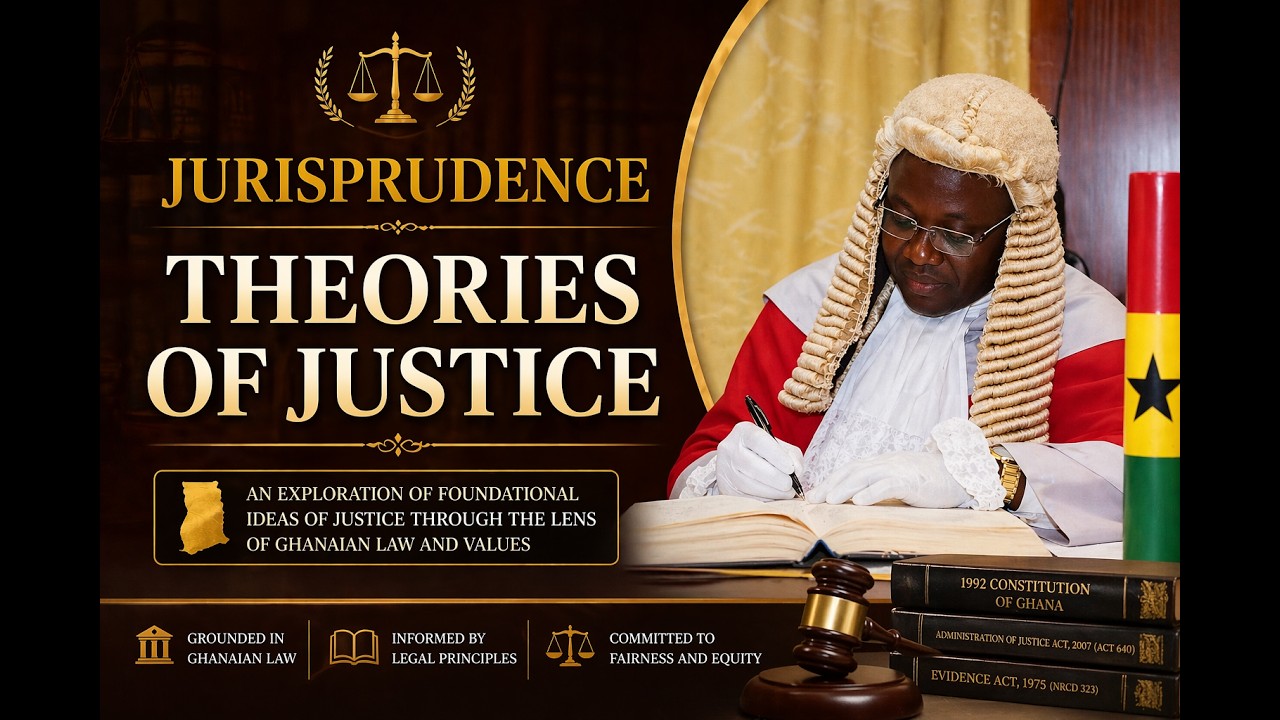
This lecture introduces the foundational theories of justice within jurisprudence and situates them within both classical philosophy and modern legal thought. Justice remains the central organising idea of law. Every legal system claims legitimacy through its commitment to justice, yet the meaning of justice itself remains deeply contested. This lecture therefore explores the intellectual frameworks through which justice is understood, debated, and applied in legal reasoning. The discussion begins with the classical conception of justice, particularly the Aristotelian idea that justice consists in giving each person what is due. From this foundation, three enduring forms of justice emerge: distributive justice, which concerns the allocation of benefits and burdens; corrective justice, which addresses the rectification of wrongs; and procedural justice, which ensures fairness in decision-making processes. These classical categories continue to shape modern legal systems, particularly in areas such as tort, contract, and constitutional law. The lecture then transitions to modern theories of justice, marking a shift from moral virtue to institutional design. The central question becomes how society should distribute rights, resources, and opportunities. In this regard, utilitarianism emerges as the first systematic modern theory, asserting that justice is achieved by maximising overall happiness. Associated with Jeremy Bentham and John Stuart Mill, utilitarianism evaluates laws and actions based on their consequences, focusing on the greatest happiness of the greatest number. However, this approach raises serious concerns, particularly its potential to sacrifice individual rights in favour of collective welfare. In response to these limitations, liberal theories of justice develop, most notably the work of John Rawls. Rawls’ theory of justice as fairness rejects the utilitarian aggregation of welfare and instead proposes principles chosen under conditions of equality. Through the device of the original position a
You May Also Like
- 1

AlbumMy Omega, My Mate: His Chosen Mate
1,918 plays
- 2
AlbumHindi Kahaniyan
pratyush verma... · 6,277 plays
- 3
AlbumGuude Buuge
Guude Buuge · 9,318 plays
- 4
AlbumMatteran Ghost
Matteran Ghost · 7,824 plays
- 5
AlbumKevin I.
Kevin I. · 7,529 plays
- 6
AlbumA Self-Taught, Decathlon, Hard Rock Musician!
Leland · 3,662 plays
- 7
AlbumKate Schettler
Kate Schettler · 1,440 plays
- 8
AlbumThe Ninth Hour of Silence
Cosmic Groove Syndicate · 9,188 plays
- 9
AlbumOne Day (Instrumental)
BERING HOTEL · 174 plays
- 10
AlbumRifas
Rifas · 5,245 plays
- 11
AlbumS Kashif
S Kashif · 5,452 plays
- 12
AlbumLAGOPHTHALMOS
Deligah Grier Publishing · 2,851 plays