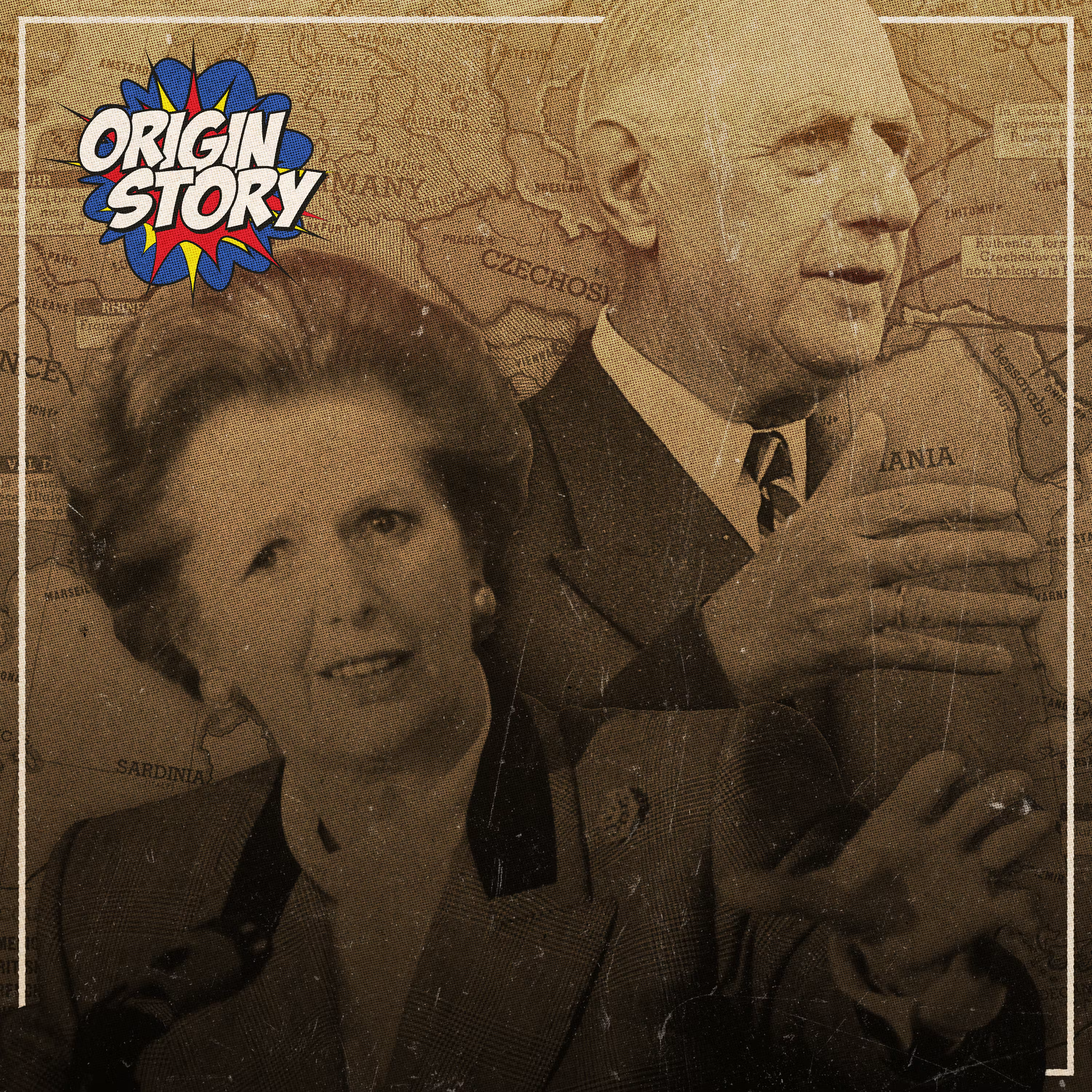
European Union – Part Two – Reality Bites
Podmasters... · 67:08 · 8,716 plays
From the album Origin Story
Description
Welcome back to Origin Story and part two of the story of European union. Last time we left Europe in 1955, with Jean Monnet’s European Coal and Steel Community bringing European nations together without military force for the first time. We pick up the story with another game-changing Europhile, the Belgian politician Paul-Henri Spaak. He convenes the Messina Conference on the “common market”, which leads in 1957 to the Treaty of Rome and the birth of the European Economic Community. Six nations come together “to lay the foundations of an ever-closer union among the peoples of Europe”. This is a period of both unprecedented economic prosperity and maddening political inertia, as France’s nationalist president Charles de Gaulle slams on the brakes, drives everyone to distraction, and says a furious “Non!” to UK membership. Although Britain has realised at last that it belongs in Europe, it takes a decade of frustration before prime minister Edward Heath can seal the deal. A whopping victory for “Yes” in the 1975 referendum seems like the last word on the matter, but there’s trouble ahead — and not just in Britain. By 1980, the EEC has added only three new member states and made its first tentative steps towards monetary union. The great visionaries Kalergi and Monnet have passed away. The UK’s new prime minister Margaret Thatcher looks set to become the next De Gaulle. And the EEC is wrestling with huge challenges like decision-making, agriculture, regional inequality and the accession of poorer nations emerging from authoritarianism. We end with the arrival of Jacques Delors and the next great leap forwards: at last, a true European Union is on the cards. How did Spaak convince European leaders to turn a coal-and-steel arrangement into a proper economic community? Why was Charles de Gaulle so determined to sabotage the alliance he sought to lead? Why did Britain finally decide to come off the sidelines of Europe and how did it become a politically explosive issue? What did Europe learn about the perils of stagna
More By Podmasters...
- 1

Origin Story Live at Union Chapel
Podmasters... · 5,485 plays · 125:12
- 2
Stephen Miller – American Fascist
Podmasters... · 3,827 plays · 76:10
- 3
AlbumOrigin Story
Podmasters... · 9,339 plays
- 4
Evangelicals – Part Two – Good News, Bad News
Podmasters... · 2,612 plays · 82:19
- 5
15-Minute Cities – How Urban Design Entered the Culture War
Podmasters... · 7,350 plays · 63:59
- 6
J.K. Rowling – Part Two – Transparent
Podmasters... · 7,840 plays · 85:29
- 7
John Rawls – Philosopher king of the 20th Century
Podmasters... · 5,283 plays · 62:49
- 8
The Luddites – Rage Against the Machine
Podmasters... · 6,604 plays · 101:46
- 9
The Battle of Cable Street – Origin Story Revisited
Podmasters... · 4,111 plays · 42:57
- 10
Blue Labour: We Need to Talk About Maurice
Podmasters... · 3,201 plays · 88:01
You May Also Like
- 1
AlbumAdrianwave Radio
4,363 plays
- 2
AlbumBroadside Radio
Real Friends · 5,605 plays
- 3
AlbumJT Coldfire Radio
7,627 plays
- 4
AlbumLynn Goldsmith and the Jeter Mountain Band
Lynn Goldsmith and the Jeter Mountain Band · 3,972 plays
- 5
AlbumTolan Radio
6,563 plays
- 6
AlbumHere
Lark Twain · 5,396 plays
- 7
AlbumJainca
Froolwa · 3,613 plays
- 8
AlbumThe Devil's buffer
Geezy On The Beat · 2,070 plays
- 9
AlbumMeloMix Pro
MeloMix Pro · 5,291 plays
- 10
AlbumCommon Sense and the Twisted Hand of Fate
Joe Kane · 3,853 plays
- 11
AlbumHAYDE.LLI.LA2
BILLY TSTRK · 349 plays
- 12
AlbumCrashes EP
F.Gazza · 3,562 plays