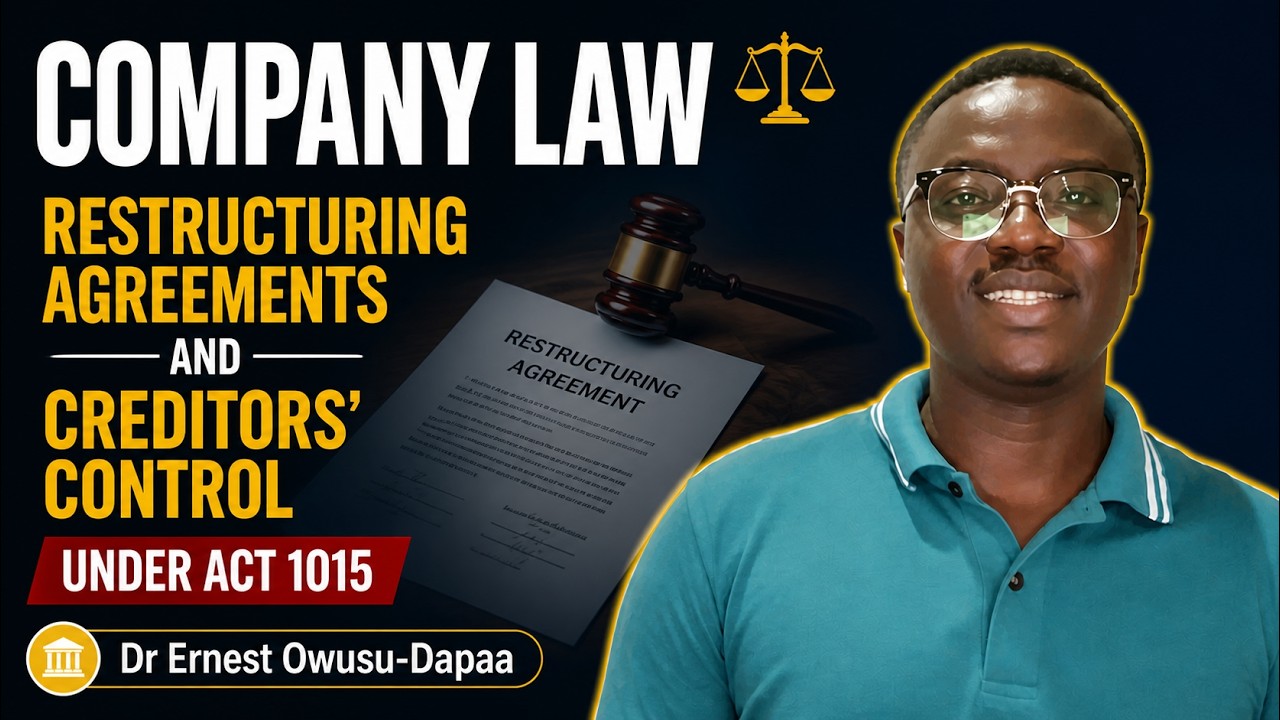
COMPANY LAW - RESTRUCTURING AGREEMENTS AND CREDITORS’ CONTROL UNDER ACT 1015
46:18 · 2,991 plays
From the album GHANA LAW TV
Description
The restructuring agreement is the core of corporate rescue under the **Corporate Insolvency and Restructuring Act, 2020 (Act 1015)**. If administration provides the framework, the restructuring agreement provides the substance. It is the legal instrument through which a financially distressed company is rehabilitated, debts are reorganised, creditor rights adjusted, and business continuity preserved. Within the administration process, the restructuring agreement arises at the outcome stage. After the administrator has taken control and investigated the company’s affairs, the process culminates in a decisive choice: rescue through a restructuring agreement or termination through liquidation. Without a restructuring agreement, administration cannot achieve its rescue objective. A restructuring agreement is essentially a statutory contract between the company, its creditors, and the restructuring officer (usually the administrator). It sets out how debts will be modified, how obligations will be performed, and how the company will continue operating. It may include debt reduction, rescheduling of payments, moratoria on enforcement, and operational restructuring. The preparation of the agreement is the responsibility of the restructuring officer. The officer must engage creditors, assess the company’s financial position, and design a workable plan. The agreement must be detailed and transparent. It typically includes the identity of the restructuring officer, funding arrangements, assets available for distribution, the duration of any moratorium, the treatment of debts, operational conditions, termination clauses, priority of payments, and a cut-off date for claims. Because the agreement will bind all stakeholders, clarity and completeness are essential. Approval of the restructuring agreement occurs at the watershed meeting of creditors. This is the most critical decision point in the entire administration process. The agreement is approved if creditors representing at least 51% in value of those voting support
You May Also Like
- 1

Albumירון דפן - Yaron Daffan
ירון דפן - Yaron Daffan · 10,687 plays
- 2
AlbumRule of Three: Book 1
601,506 plays
- 3
AlbumMy Dystopian Morning
Rancid Poets · 174 plays
- 4
AlbumSlow Feet Don't Eat, Vol. 2
I5da.p · 6,994 plays
- 5
AlbumI can hear HIM calling
Drew Thomas · 7,343 plays
- 6
AlbumThis is Flaming Dragon
IAmKang85 · 9,837 plays
- 7
AlbumO Chá
O Chá · 10,499 plays
- 8
Albummy letter to you
KayCee · 5,403 plays
- 9
AlbumGreetings From The Solar System
Dodi Palese · 6,542 plays
- 10
AlbumDestination
Bingiel Renana · 6,915 plays
- 11
AlbumNight Grooves
Denny Jiosa · 8,755 plays
- 12
AlbumAaron Sean
Aaron Sean · 349 plays