
Album
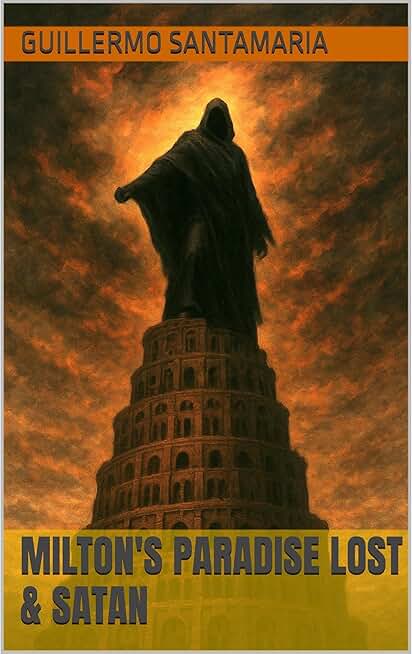
MILTON'S PARADISE LOST & SATAN
Isaiah 14:12, with its phrasehêlēl ben-šāḥar(“shining one, son of dawn”), originally referred to the King of Babylon in the form of a prophetic taunt-song (Isa. 14:4). The image of the morning star (Venus) mocked the arrogant ruler who exalted himself as divine but was cast down to Sheol. In Jewish interpretation, the passage was seen as satire of a human king, not a story about Satan. Early Christian writers, however, such as Tertullian, Origen, and Cyprian (2nd–3rd centuries), were the first to apply the verse allegorically to Satan’s fall. Jerome’s Latin Vulgate (4th century) translatedhêlēlasLucifer(“light-bearer”), and Augustine made this identification doctrinal by teaching that Satan was the original “Lucifer” who fell through pride, establishing pride as the essence of sin. Medieval theologians such as Gregory the Great and Thomas Aquinas reinforced this reading, and the Reformers generally inherited it: Martin Luther allowed the dual meaning (Babylon’s king literally, Satan spiritually), while John Calvin insisted that the immediate sense applied only to Babylon’s king, though he admitted the king’s pride mirrored Satan’s rebellion. Particular Baptists such as John Gill and Benjamin Keach also followed the dual interpretation, reading the text as both a taunt of Babylon’s monarch and an allegory of Satan’s fall, while later preachers like Spurgeon quoted Milton and the tradition cautiously, always subordinating it to Scripture. In contrast, modern historical-critical scholarship, beginning in the Enlightenment and cemented in the 19th century, denied the dual sense entirely, arguing that Isaiah 14:12 is about the King of Babylon alone, and that the Lucifer = Satan connection was a later Christian invention. Old School Baptists like Gilbert Beebe and Samuel Trott exemplified this sober approach, avoiding the Lucifer tradition altogether and instead grounding their teaching about Satan in clearer texts such as Job 1–2, Matthew 4, and Revelation 12.Read more
Lagu: 6 · 8.796 diputar
- 6.9270:16
- 7.3650:43
- 6.9370:04
- 1.3800:05
- 8.0990:22
- 5.9840:31
- The turning point comes with the rise of historical-critical scholarship in the 18th–19th centuries.8.5460:09
- 9.8691:00
- 6.8050:31
- 4.1040:22
- 5230:07
- 9.0770:32
- 8.8182:57
- 2.8720:18
- 3.8130:18
- 7.0430:05
Mungkin Kamu Suka
- 1
AlbumSheikh Ahmad Sulaiman Tv
3.377.605 diputar
- 2
AlbumA Boy and His Mom: The Hidden Blessings of Autism
14.824 diputar
- 3
AlbumOne God: The Unfinished Reformation
79.875 diputar
- 4
AlbumCatholic Radio Radio
10.558 diputar
- 5
AlbumSpiritual warfare With Psalm 35, Prayers For Freedom Over,: Financial hardship, Marine Powers, Spirit wives/Husbands, Demonic Attacks, , Breaking Barriers, Sickness, Delay & Stagnation, Anxiety
5.930 diputar
- 6
AlbumMobilmánia
Mobilmánia · 8.247 diputar
- 7
AlbumAcross the Atlantic: Norwegian Pentecostal Missionary Work in the Americas
6.925 diputar
- 8
AlbumJamieff89
Jamieff89 · 3.630 diputar
- 9
Albumمحمد عبده 2024
14.998 diputar
- 10
AlbumSKAM
SKAM · 4.122 diputar
- 11
AlbumThe Book of Revelation: Insights and Interpretations
2.790 diputar
- 12
AlbumNoa Tylo Radio
Bryan Hawn · 5.050 diputar