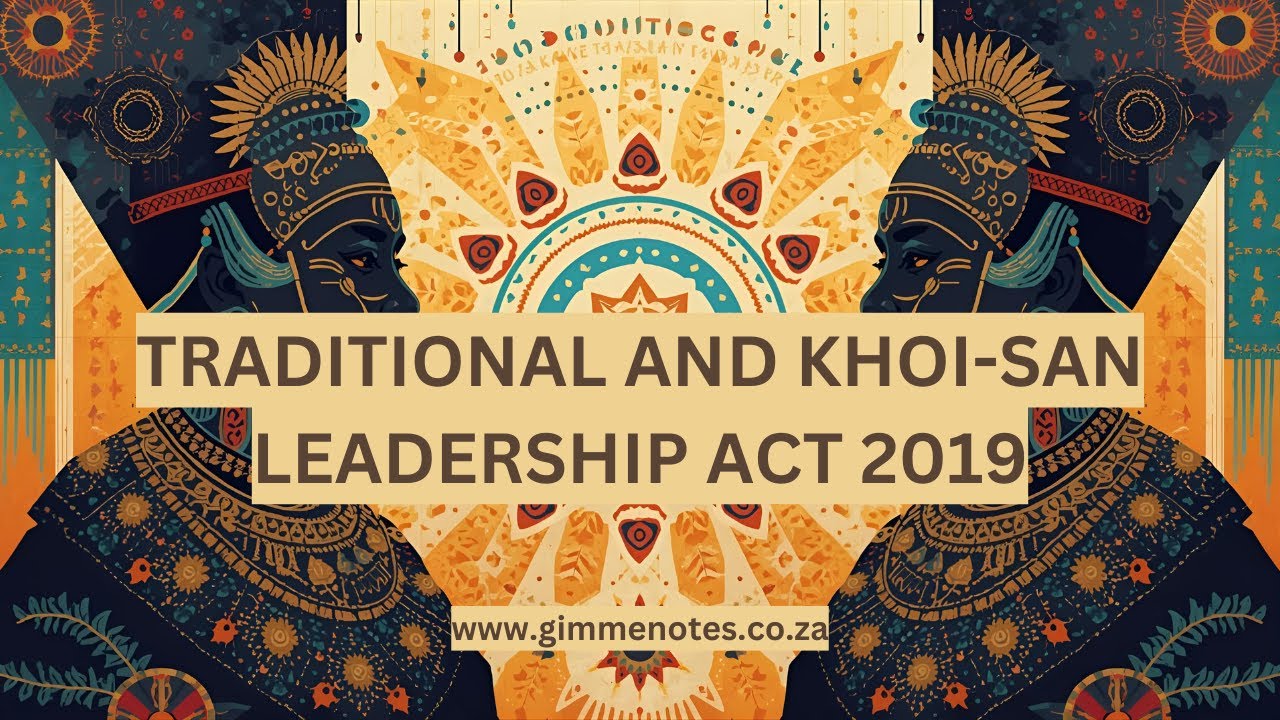
Traditional and Khoi-San Leadership Act 2019: Recognising Heritage and Equality in South Africa
11:53 · 174 écoutes
De l'album gimmenotes
Description
The Traditional and Khoi-San Leadership Act 3 of 2019 is a landmark South African law that formally recognizes and regulates the leadership structures of traditional and Khoi-San communities. Updated most recently in May 2024, the Act brings together all systems of indigenous leadership under one unified framework—acknowledging the Khoi-San people for the first time in statutory law. Its purpose is to balance the preservation of cultural heritage with the principles of democracy, equality, and constitutional governance. The Act outlines procedures for the recognition of traditional and Khoi-San leaders and communities, as well as the withdrawal of such recognition when necessary. It establishes key governance bodies, including kingship and queenship councils, traditional councils, Khoi-San councils, and the National House of Traditional and Khoi-San Leaders. These structures are given defined powers and responsibilities, supported by administrative frameworks to ensure accountability, participation, and alignment with the national government. A crucial aspect of this legislation is its emphasis on human rights and gender equality. The Act explicitly requires all customary law practices and leadership roles to comply with the Bill of Rights, ensuring that no person is discriminated against based on gender, belief, or status. It also provides mechanisms for dispute resolution, a detailed code of conduct for leaders, and transitional arrangements to integrate pre-existing traditional leadership structures with the new legal framework. The Traditional and Khoi-San Leadership Act 2019 plays an essential role in promoting inclusive governance and cultural recognition in South Africa. By bringing traditional and Khoi-San communities into the national legal structure, it strengthens unity, preserves indigenous identity, and ensures that leadership is both legitimate and accountable—rooted in heritage, yet consistent with democratic and constitutional values. 📚 Visit: https://www.gimmenotes.co.za
Vous aimerez aussi
- 1

AlbumMachines
All Good Things · 11 729 écoutes
- 2
AlbumYBC Geeks
YBC Geeks · 10 369 écoutes
- 3
AlbumReminiscence EP
Kruse · 11 519 écoutes
- 4
AlbumRadio B1: Booster Son Allemand Et Réussir Son B1
Galilée Zoa... · 5 722 écoutes
- 5
AlbumCrimson Odyssey
Randoiman · 6 694 écoutes
- 6
AlbumJ'ai la Couleur des Cerises et Je Ne Suis Pas Morte
Anton Truc · 3 590 écoutes
- 7
AlbumPrince Jefe
Prince Jefe · 9 327 écoutes
- 8
Album4:44
Kairuku · 8 514 écoutes
- 9
AlbumVen a mi
Carlos Gonzalez · 5 532 écoutes
- 10
AlbumFerro
Ferro · 6 385 écoutes
- 11
Albumuniverman
univerman · 10 779 écoutes
- 12
AlbumLTR Radio
10 368 écoutes