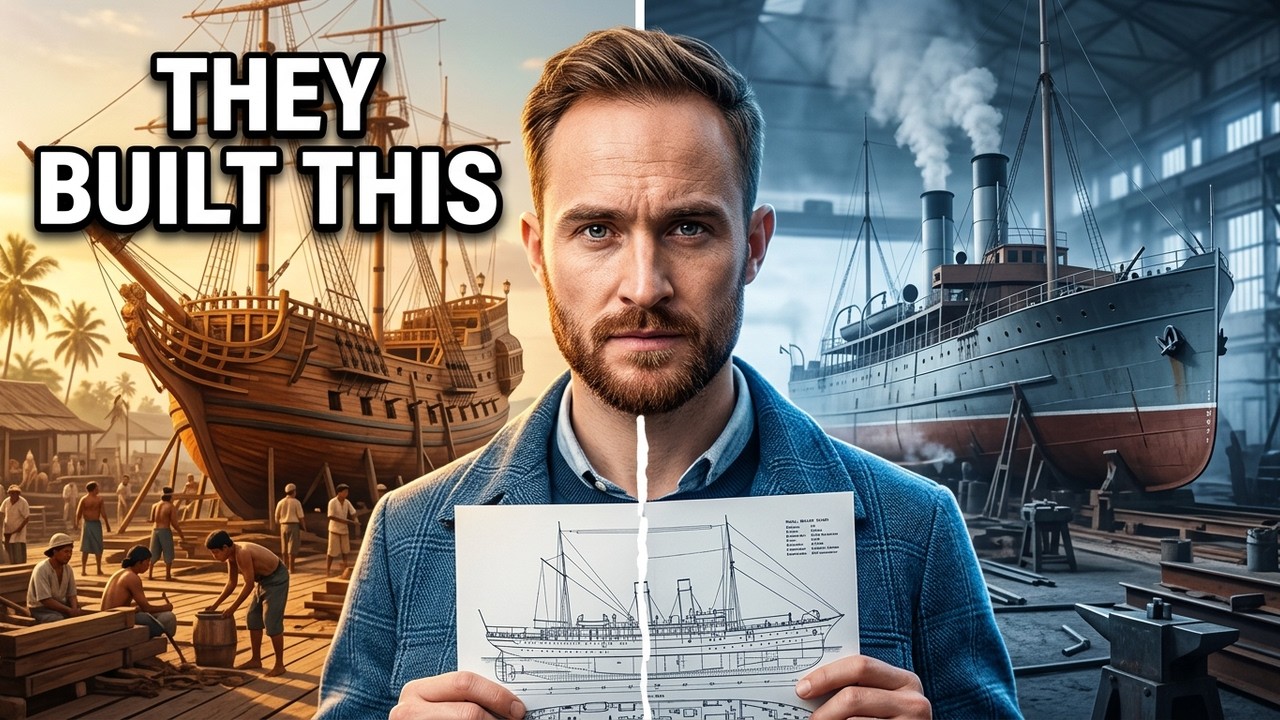
The Ships That Built an Empire – And the Filipinos Who Made Them
8:35 · 4 032 écoutes
De l'album The Philippines They Erased
Description
Filipinos built steamships Cavite, Philippine shipbuilding history, Cavite shipyard history, Manila galleon to steamship, Philippine-American War gunboats, Spanish colonial Philippines navy, Philippine maritime history facts — most people think Philippine shipbuilding history ends with the Manila galleons, but the same shipyard at Cavite carried Filipino labor straight through the transition from wooden sailing ships into steel-hulled, steam-powered gunboats, with consequences nobody usually talks about. For two and a half centuries, Cavite was the heart of Philippine shipbuilding, producing the massive wooden galleons that connected Manila to Acapulco. When that trade ended in 1815, most history lessons treat Philippine shipbuilding as finished. It wasn't. By the 1880s and 90s, the same shipyard was producing steel-hulled, steam-powered gunboats — built using Filipino industrial labor, for the Spanish colonial government. This video traces that overlooked transition, what happened to those ships during the 1898 Battle of Manila Bay, and the uncomfortable irony of vessels built by Filipino hands later being used to patrol against the Philippine Revolution itself. QUICK FACTS: • Cavite shipyard built Manila galleons for roughly 250 years, from the 1600s until the trade ended in 1815 • In 1887, the Manila Slip Co. at Cavite laid down the steel-hulled gunboat Pampanga • In 1895–96, Cavite built an entire class of steel-hulled gunboats, the General Blanco class, for colonial patrol duty • Commodore George Dewey's fleet destroyed the Spanish navy at the Battle of Manila Bay in 1898 and captured the Cavite arsenal • The Pampanga was captured, recommissioned by the U.S. Navy in 1899, and used to patrol the Philippines during the Philippine-American War • Filipino-led shipping companies like Compania Maritima and De la Rama Steamship Co. later built major steamship fleets under Filipino ownership If this is a side of Philippine maritime history you hadn't heard before, subscribe — I cover the overlooked chapters of Ph
Vous aimerez aussi
- 1

Album#B4BAT¡!
Stevie Monclér · 2 861 écoutes
- 2
AlbumCool's Eternal
Cool's Eternal · 8 177 écoutes
- 3
AlbumVarious Varietys and collections
EndureMore · 6 966 écoutes
- 4
AlbumPersistence Of Vision
Vital Signs · 6 606 écoutes
- 5
AlbumBread, Butter and Cheese
JIRO 鸡肉 · 523 écoutes
- 6
AlbumEcliptic
Qualia · 4 344 écoutes
- 7
AlbumNow (The Complete Collection)
C.Y.B. · 7 845 écoutes
- 8
AlbumThe Honeydrippers, Vol. 1 (Expanded)
The Honeydrippers · 8 286 écoutes
- 9
AlbumCELEBRE
CELEBRE · 6 506 écoutes
- 10
AlbumPr Poswal
Pr Poswal · 2 151 écoutes
- 11
AlbumSweet Nothin's
Wanda Jackson · 7 408 écoutes
- 12
AlbumFlowmawell
Flowmawell · 4 901 écoutes