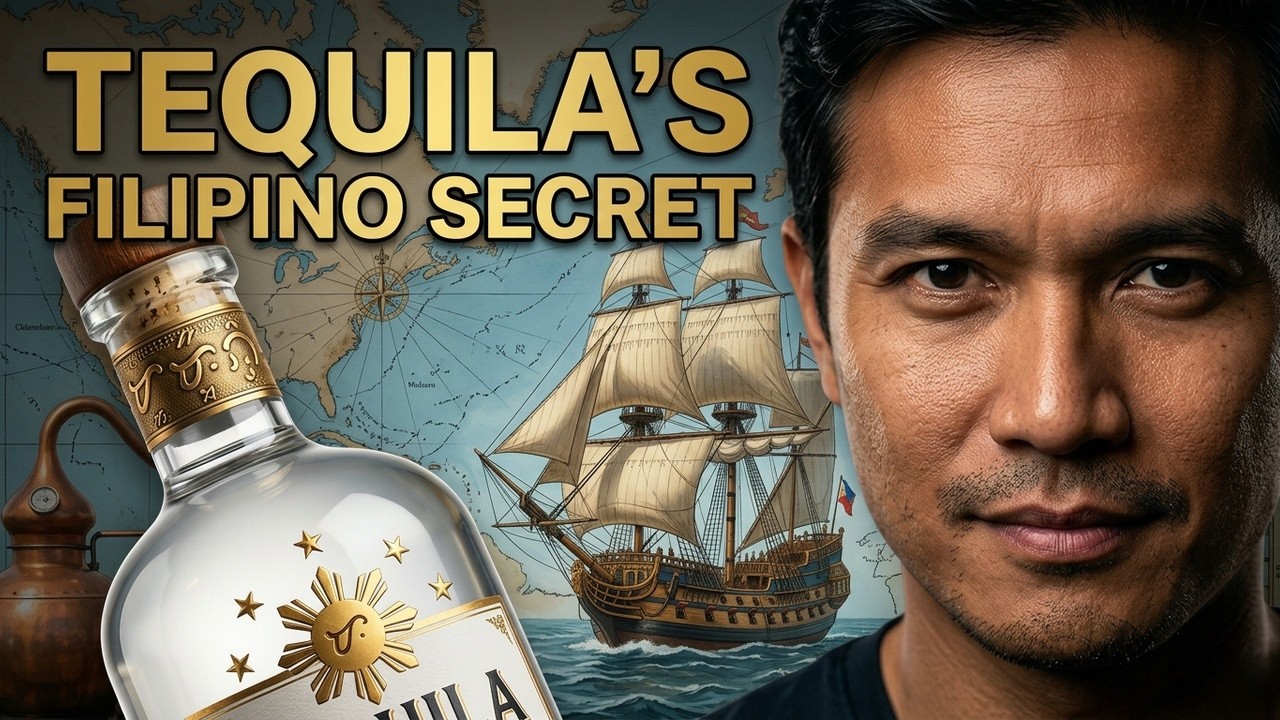
The SECRET History of Tequila: A Filipino Connection?
6:15 · 4 191 écoutes
De l'album The Philippines They Erased
Description
Tequila history is not just a Mexican story. See how ancient maritime routes and non-European technology shaped this famous spirit. Most people assume tequila production is entirely a Mexican innovation, born from the blue agave plant in Jalisco. However, the true origins of the blue agave spirit involve a complex intersection of maritime history that rarely gets discussed. We examine the specific design of traditional wood and clay stills found in western Mexico, which defy the standard European equipment narratives often cited by historians. This breakdown is for anyone interested in the technical evolution of spirits and the surprising cross-cultural influences that built the modern industry. You will learn why traditional tequila stills look nothing like their European counterparts and how this detail shifts our understanding of the Mexican national drink. Filipino origins of tequila, Manila Galleon Philippines Mexico history, alambique filipino distillation, lambanog coconut spirits Mexico, Filipino influence Mexican culture, Manila Acapulco Galleon trade, tuba drink Mexico Colima — tequila is sold to the world as a purely Mexican creation, but the distillation technology that made it possible was brought to Mexico by Filipino sailors and laborers crossing the Pacific on the Manila-Acapulco Galleons over four hundred years ago. From 1565 to 1815, the Philippines and Mexico were part of the same Spanish colonial territory, connected by the greatest trade route of the age. Thousands of Filipino settlers arrived on Mexico's Pacific coast carrying deep knowledge of coconut distillation — and with it, a specific wood-and-clay still called the alambique filipino that pre-Hispanic Mexico simply didn't have. When Spanish authorities banned their coconut spirits to protect European wine profits, these Filipino distillers moved inland to the highlands of Jalisco, found wild blue agave plants growing everywhere, applied their exact same distillation technique — and accidentally invented what the world would eventu
Vous aimerez aussi
- 1

AlbumOrbit Beats
Orbit Beats · 5 833 écoutes
- 2
AlbumThe African Art of life
Mmutla Global music · 6 365 écoutes
- 3
AlbumLADEN LABS
LADEN LABS · 10 009 écoutes
- 4
AlbumMamá Ladilla Radio
3 390 écoutes
- 5
AlbumRider Tax-Cara-Cara
Rider Tax-Cara-Cara · 8 335 écoutes
- 6
AlbumZLON3
ZLON3 · 3 591 écoutes
- 7
AlbumSebastián Alejandro
Sebastián Alejandro · 3 681 écoutes
- 8
AlbumWhy So Sad Radio
4 062 écoutes
- 9
AlbumNAO Radio
Soon · 6 315 écoutes
- 10
AlbumCartel
Cartel · 9 268 écoutes
- 11
AlbumRomel Moralez
174 écoutes
- 12
AlbumDutch Party
Lithium Techno · 6 992 écoutes