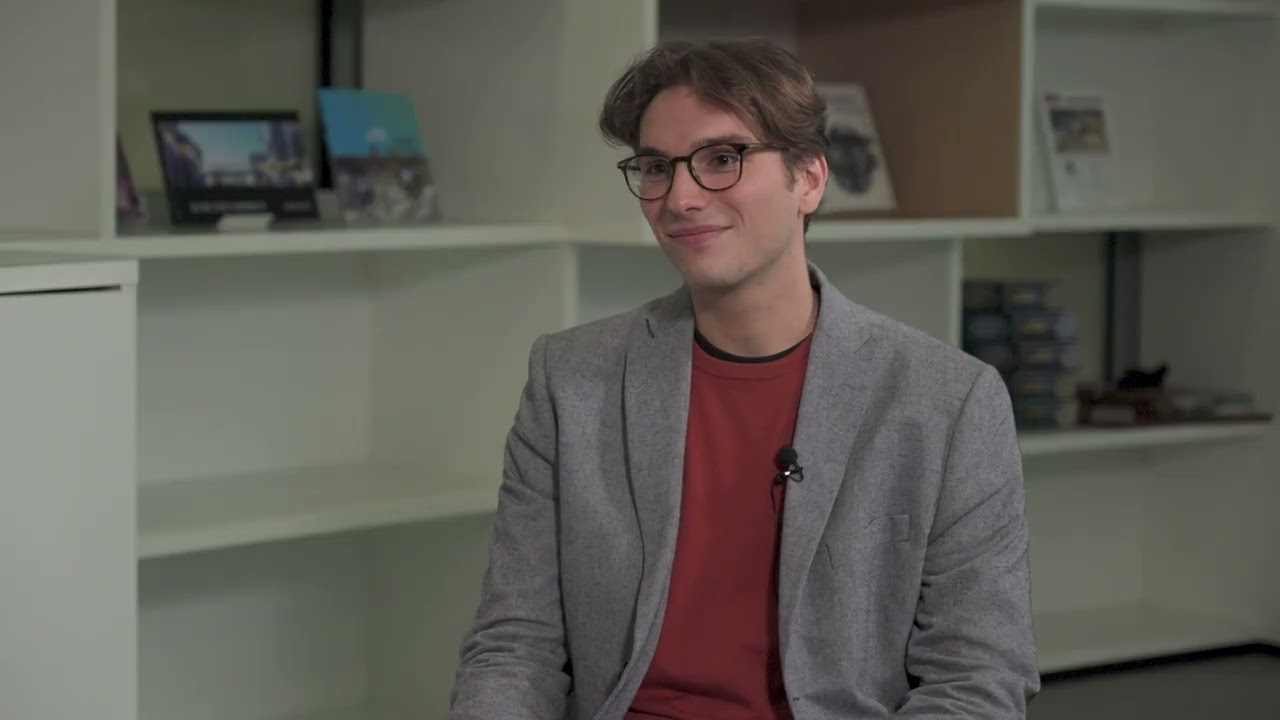
The internationalism of European freemasons (1845–1935)| Joachim Berger
38:17 · 174 écoutes
De l'album Geneva Graduate Institute
Description
To explore more of the Yves Oltramare Chair's activities, come visit our website at https://www.graduateinstitute.ch/fr/discover-institute/support-institute/chaire-yves-oltramare In this new episode of the Entretiens de la Chaire Yves Oltramare, Jacob Thornton (Master's student at the IHEID) sat down with Joachim Berger, a historian dedicated to the history of masonic internationalism and author of « Mit Gott, für Vaterland und Menschheit? Eine europäische Geschichte des freimaurerischen Internationalismus (1845–1935) », published in 2020. Drawing on the archives of various European grand lodges — the vast majority of which are publicly accessible — Joachim Berger charts a historical panorama of the transnational initiatives that shaped relations between masonic associations across Europe from 1845 to 1935. While Freemasonry has often been portrayed as a clandestine and influential organisation rooted in mysterious rituals and a capacity for collective action, Joachim Berger's research complicates this reductive picture. The European masonic landscape was shaped by the divergent socio-historical trajectories of European lodges, which gave rise to disagreements that proved difficult to overcome. The main sources of controversy centred on whether Freemasonry should rest on a religious or secular foundation. Notably, freemasons in countries where the Catholic clergy church held a dominant social position — such as Italy and France — developed a strong strain of anticlericalism that had no equivalent among their counterparts in Germanic or Anglo-Saxon countries. To bridge these differences, masons repeatedly made efforts to forge a shared "masonic" identity based on the ideal of universal human brotherhood and to construct a cross-border structure capable of uniting all lodges. These attempts included the International Confederation of Supreme Councils (founded in Lausanne, 1875), the Bureau international des relations maçonniques seated in Neuchâtel (1903), and the Association maçonnique internationale in Geneva
Vous aimerez aussi
- 1

Albumkartky Radio
11 899 écoutes
- 2
AlbumGauna
Gauna · 8 749 écoutes
- 3
AlbumBack 2 da Summer
Lb3 · 6 652 écoutes
- 4
AlbumMr. Diggz
Crash Diggz · 9 115 écoutes
- 5
AlbumTifer
Tifer · 4 023 écoutes
- 6
AlbumUnholy Crusade
Lord Belial · 9 777 écoutes
- 7
AlbumQ'nilyon
Q'nilyon · 10 519 écoutes
- 8
AlbumREBORN IN SPRING
Remède · 6 117 écoutes
- 9
AlbumLONLON
Wana.G · 8 559 écoutes
- 10
AlbumPardas Na Casa
Pardas Na Casa · 4 321 écoutes
- 11
AlbumVinapra
Vinapra · 7 294 écoutes
- 12
AlbumNew2u
Badboyryu · 1 600 écoutes