The Barangay System That Ruled the Philippines for Thousands of Years
10:35 · 5 065 écoutes
De l'album The Philippines They Erased
Description
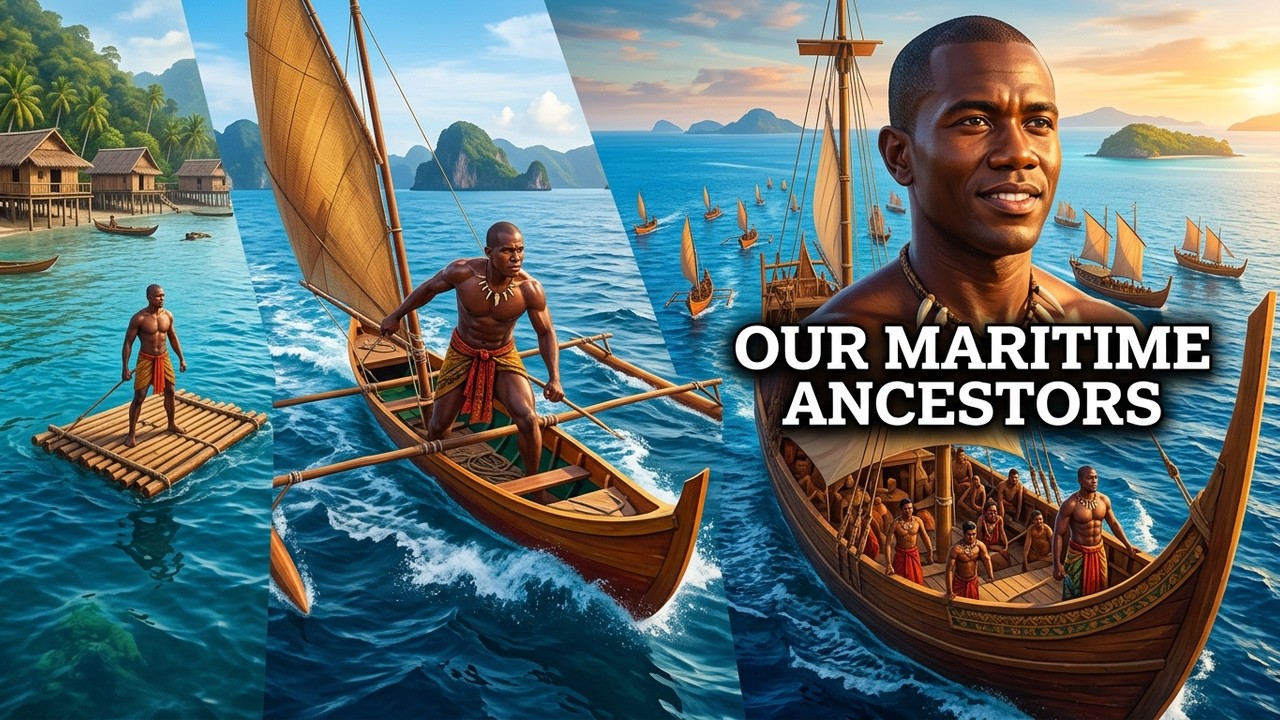
Explore Filipino history before colonization to understand the true roots of the archipelago. Learn how early Austronesian settlers shaped the culture and identity of the islands. This video examines the timeline of early human activity in the region, tracing the path from the first arrivals to the establishment of complex societies. It is designed for anyone interested in the pre-colonial Philippines and the specific origins of its people. We look at the archaeological evidence of settlement and how these populations adapted to the archipelago environment. Central to this narrative is the development of an advanced seafaring culture. You will gain a clear perspective on how maritime skills fostered a unique system of interdependence and community long before external influences arrived. Understanding this Austronesian legacy is essential to grasping the foundational values that define the history of the Philippines today. The Philippine islands were already home to ancient peoples for tens of thousands of years before the Austronesians arrived. Homo luzonensis, a distinct ancient human relative, has been dated in Callao Cave to at least 50,000 to 67,000 years ago. The ancestors of today's Negrito populations — the Aeta, Agta, Ati, and Batak — established a complex world of hunter-gatherers across the archipelago at least 50,000 years ago. Then around 5,000 years ago an agricultural and maritime revolution emerged in Taiwan. The Austronesians, masters of the outrigger canoe and the crab-claw sail, began island-hopping south. They reached the Batanes Islands around 2200 BC and spread through Luzon, the Visayas, and Mindanao over centuries, blending with existing Negrito populations to create the genetic and cultural foundation of the modern Filipino people. Their legacy is everywhere in Filipino life today. Almost all 160 indigenous Philippine languages — Ilocano, Cebuano, Tagalog, Bisaya, and dozens more — belong to the Austronesian family that stretches from Madagascar off the coast of Africa to Hawaii and Ne
Vous aimerez aussi
- 1

AlbumSobre Todos para Ninguém
Travo · 5 826 écoutes
- 2
AlbumBorder Worlds Symphony
Andrey Avkhimovich · 5 445 écoutes
- 3
AlbumCatalin Arabu
Catalin Arabu · 9 647 écoutes
- 4
AlbumCODE OF MELODY
sasaka · 5 410 écoutes
- 5
AlbumIf this city had ears (Original Motion Picture Soundtrack)
Chris Walsh · 10 458 écoutes
- 6
Album靈動音樂坊 Smart.Music.Workshop
靈動音樂坊 Smart.Music.Workshop · 6 103 écoutes
- 7
AlbumToto Mx
Toto Mx · 174 écoutes
- 8
AlbumLowlife Radio
9 698 écoutes
- 9
AlbumTeejay
2 267 écoutes
- 10
AlbumMister G Radio
7 667 écoutes
- 11
AlbumHack Narawin
Hack Narawin · 5 832 écoutes
- 12
AlbumPaPa Shiraz
PaPa Shiraz · 8 657 écoutes