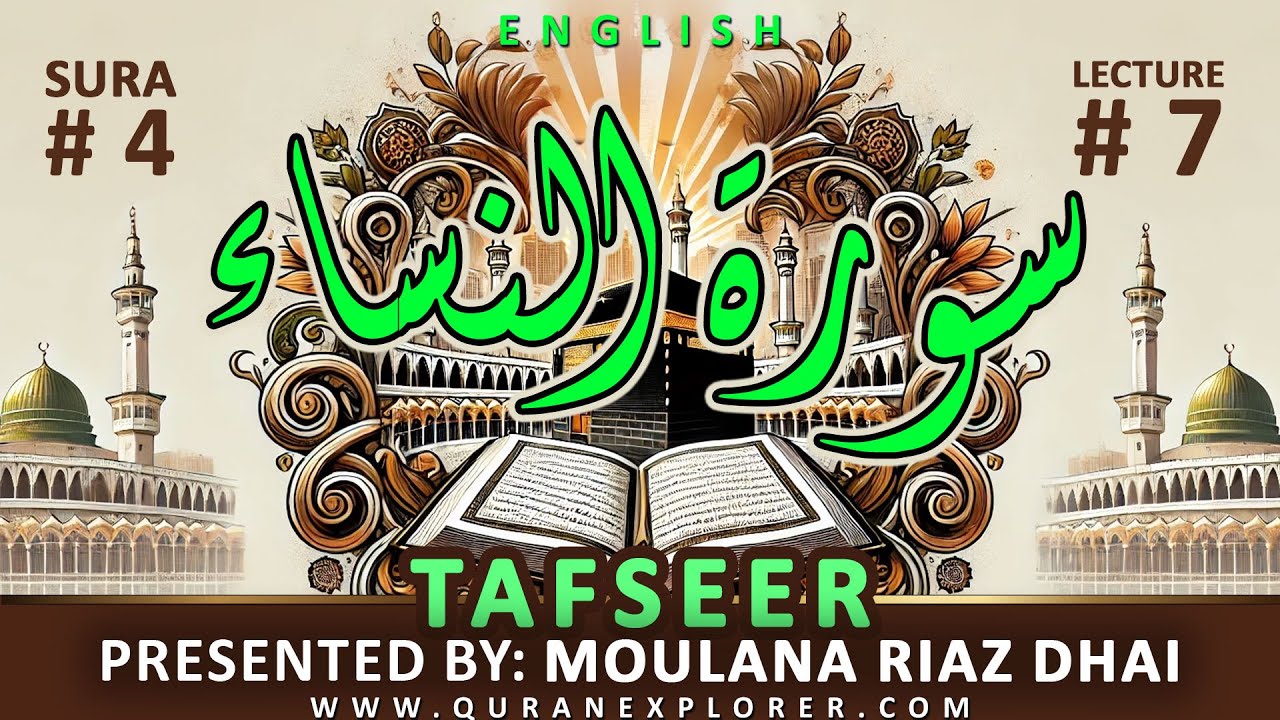
Mahram Rules & Marriage Boundaries | Surah An-Nisa (4:22–24) Tafseer in English | Moulana Riaz Dhai
32:18 · ٣٬١٣٩ استماع
من الألبوم Surah An-Nisa Tafseer in English | Complete
الوصف
Bismillah! In this concise, student-friendly tafseer, Moulana Riaz Dhai explains key family laws in Surah An-Nisa (4:22–24): who is permanently forbidden in marriage (mahram), who is temporarily forbidden, fosterage (rada’ah) and its impact on lineage, and practical adab when interacting with mahram and non-mahram relatives. The lecture opens with an inspiring reflection on the life of Qari Basheer Ahmed Siddiq (رحمه الله)—a Pakistani scholar who taught Qur’an in Masjid an-Nabawi for 62 years—reminding us that Allah elevates people through the Qur’an. What you’ll learn: • Clear, Qur’an-based guidance on marriage prohibitions: mothers, daughters, sisters, paternal/maternal aunts, nieces; father’s wives; mother-in-law; daughter-in-law; step-daughters (with the condition of consummation); prohibition of marrying two sisters at once; and women already married. • Fosterage (rada’ah): how shared breastfeeding creates mahram ties and extends to “foster nieces/aunts,” safeguarding lineage. • Everyday fiqh & adab: respectful speech boundaries, appropriate gaze, modest dress at home, khalwah (seclusion), and travel rulings with a mahram. Benefits: • Protects family dignity, lineage, and social harmony. • Gives practical boundaries for modesty in modern life. • Strengthens love of Qur’an through real-life application. Keywords: Surah An-Nisa tafseer in English, mahram rules Islam, marriage prohibitions Quran 4:22–24, rada’ah fosterage, Islamic family law, modesty adab non-mahram, Moulana Riaz Dhai lecture Importance of topic: These verses are foundational for Islamic family life. They protect lineage (nasab), clarify lawful marriage options, and set day-to-day interaction boundaries that preserve modesty and prevent harm. Understanding them helps families avoid invalid marriages, social conflict, and spiritual harm. Topic discussed in this lecture: • Inspiration: how Qur’an elevates servants of Allah (story of Qari Basheer Ahmed Siddiq) • Categories of permanent/temporary marriage prohibitions (Qur’an 4:22–24) • Foster
قد يعجبك أيضاً
- 1

ألبومThindhimba
٨٬٦٠٥ استماع
- 2
ألبومഡോക്ടർ ഡെവിൾ[malayalam]
٤٬٤٤٢ استماع
- 3
ألبومPattmayne
Pattmayne · ٤٬٢٦٤ استماع
- 4
ألبومDriven By The Harp
Octavia · ١٠٬٤٤٧ استماع
- 5
ألبوم52 Photography Challenges: One Year of Inspiration To Improve Your Photography
١٬٠٤٦ استماع
- 6
ألبومFiction
Tylor Wix · ٥٬٥٦١ استماع
- 7
ألبومTransrapid Maglev
Courbes Bézier · ٣٬٧٢٢ استماع
- 8
ألبومOne Song
One Song... · ١٠٬٠١٦ استماع
- 9
ألبومu.looks
u.looks · ٧٬٥٧٩ استماع
- 10
ألبومCoalo Zamorano
Coalo Zamorano · ٥٬١٩١ استماع
- 11
ألبومKINKi
KINKi · ٣٬٤٣١ استماع
- 12
ألبومShaunTheFlame
١٧٤ استماع